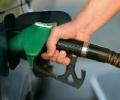
Despite raising petrol prices by around Rs 2.95 a litre - the second-biggest increase in this calendar year so far - public and private retailers are losing Rs 50 crore a day on selling the auto fuel.

Petroleum Minister Murli Deora is likely to meet Finance Minister P Chidambaram later this week to seek greater compensation for oil companies, who are currently losing about Rs 450 crore (Rs 4.5 billion) a day on fuel sales. Indian Oil, Bharat Petroleum and Hindustan Petroleum are likely to see doubling of revenue loss on sale of petrol, diesel, domestic LPG and PDS kerosene to Rs 150,000 crore. The three fuel retailers together lost Rs 77,304.50 cr on fuel sale in 2007-08.

The oil industry experienced three upheavals between 1973 and 1991, which seem to be etched in the memory of the industry's decision makers. Naturally, at the sign of a new crisis, the decision makers like to dip into those tumultuous decades to find ways to deal with the new shock, in addition, of course, to expert reports and forecasts. So, the industry bigwigs turned the pages of history to get a peek into the future of oil price movements after Russia invaded Ukraine in 2022, Israel attacked Gaza in 2023, Iran-linked Houthi rebels pounded tankers crossing the Red Sea in support of Palestine the same year, and Iran rained missiles on Israel in 2024.
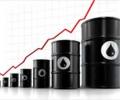
The revenue loss, termed as under-recovery by oil firms, will be the highest-ever.

The basket of crude oil India buys from overseas markets averaged $68.07 per barrel in September as against the August average of $71.98 a barrel.
Those in favour of a 15-day cycle for price adjustment argue that oil firms already have a mechanism of calculating the desired fuel prices on 1st and 16th of every month.

Petroleum Minister Murli Deora on Monday launched the service, which will be initially available in the national capital and would be extended to other metropolitan cities, state capitals and towns.
A Parliamentary Committee asked the government on Thursday to seek approval of Parliament before privatising oil refiners Hindustan Petroleum Corporation Ltd and Bharat Petroleum Corporation Ltd as the two were nationalised
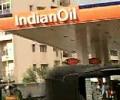
State-owned Indian Oil Corp (IOC) today said it is losing Rs 189 crore per day on selling auto and cooking fuel below cost as global crude oil prices shot up to USD 102 per barrel.
The government's decision to raise fuel prices in June has scuttled the oil companies' plans to reduce their losses from retail fuel sales as consumers are buying less of premium fuels, which is more expensive than normal fuels.
The public sector oil refining and marketing companies Indian Oil Corporation, Hindustan Petroleum Corporation and Bharat Petroleum Corporation are back on the radar of investors as their profit levels reach record highs.
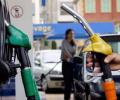
Petrol and diesel prices were cut by Rs 2 per litre each as state-owned oil companies ended a nearly two-year-long hiatus in rate revision, just hours before the general election schedule was announced.
Besides IOC, Royal Dutch Shell is believed to have evinced interest in reviving the petrol pumps, industry sources said. Reliance, as part of a two part bid process, had sought expression of interest from IOC, Shell, Bharat Petroleum and Hindustan Petroleum by Friday for a possible partnership for reopening the petrol pumps.
The government on Wednesday broadly hinted about a hike in petrol and diesel prices, saying although it has kept retail prices unchanged it cannot do so for long given the rise in crude oil rates.
The government will provide private companies subsidy equivalent to that given to state retailing firms on LPG, petroleum secretary B K Chaturvedi said.

State fuel retailers IOC, Bharat Petroleum and Hindustan Petroleum sell diesel, domestic LPG and kerosene at government dictated rates which are lower than cost of production.
A parliamentary panel has rapped the government for bypassing Parliament in deciding to privatise oil refiners Hindustan Petroleum Corp Ltd and Bharat Petroleum Corp
After a year of sluggish growth in fuel retail outlets, the three state-run oil-marketing companies--Indian Oil Corporation, Bharat Petroleum Corporation and Hindustan Petroleum Corporation--have chalked out aggressive plans for expansion in the next financial year. They will be commissioning over 2,100 outlets in 2009-10--over three times what they added in the current year--at an investment of about Rs 1,200 crore.
The three firms had planned to jointly buy or lease plantations and related units for producing ethanol, a by-product of sugarcane that is doped in petrol to reduce dependence on imported oil. The three firms have suffered a Rs 14,700-crore (Rs 147 billion) net loss in the first-half of the current fiscal and were living on borrowed money as they lost heavily on retail fuel sales domestically.
Many of the 37,000 petrol pumps across the country could go dry by Thursday if the indefinite strike by executives from public sector oil companies continues. Over 55,000 oil PSU officers from 14 oil companies -- under the umbrella of the Oil Sector Officers Association (OSOA) -- began their indefinite strike on Wednesday demanding higher wages.

State-owned oil firms on Tuesday cut jet fuel, or ATF, prices by 4 per cent, the first reduction in rates since July, on softening of international oil prices.
Indian Oil, Bharat Petroleum, Hindustan Petroleum to open over 3,000 outlets this year. Even losses of over Rs 300 crore (Rs 3 billion) per day from selling automobile fuels have not stopped government-owned oil marketing companies from expanding their retail network across the country.
Reliance Communications Ltd's subsidiary Reliance Mobile World on Wednesday announced introduction of LPG gas booking service on mobile phones.

Jet fuel will cost Rs 37,300 per kl in Mumbai, home to the nation's busiest airport, from Rs 38,246.60. The reduced rates will help cash-strapped airlines cut fuel cost, which constitutes roughly 40 per cent of their operational cost.
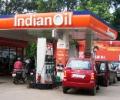
Indian Oil Corporation on Tuesday said it may lose over Rs 25,000 crore (Rs 250 billion) in revenues this fiscal on selling fuel below imported cost.

Indian Oil Corporation (IOC), Bharat Petroleum and Hindustan Petroleum may post a combined loss of Rs 10,700 crore in June quarter on selling petrol and diesel at rates below cost, a report said on Monday. While the raw material (crude oil) prices soared in April-June, petrol and diesel prices were not revised, leading to marketing losses which offset strong refining margins, ICICI Securities said in the report. The three state-owned oil marketing companies -- IOC, BPCL and HPCL -- control 90 per cent of the retail petrol and diesel sales in the country.
